

Whether for a butcher block or a kitchen countertop, solid wood is a timeless classic. Its warm appearance pairs easily with different materials and instantly brings a touch of authenticity to the room.
But how do you protect your wood so it stays beautiful and durable over the years? Natural oils for wood countertops allow you to protect the wood while preserving its natural appearance. It’s a simple solution that combines protection and aesthetics.
We explain how to choose the countertop oil that best suits your project and how to prepare your wood and apply it!
01
Preparing the Surface Before Applying a Wood Countertop Oil
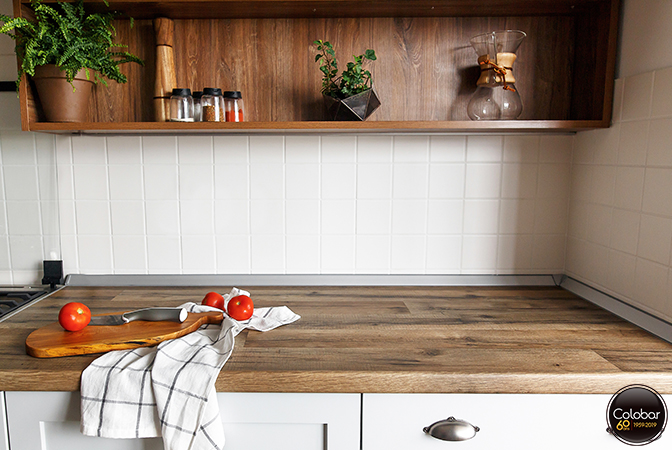
Before applying the oil, you need to start by properly preparing the surface. Good preparation allows the oil to penetrate evenly into the wood and achieve a more durable and more beautiful finish.
The wood must first be perfectly clean and free of contaminants such as grease, dust, or product residues. These contaminants can hinder oil penetration and create finishing problems.
- To degrease the surface, use a product that evaporates without leaving residue, such as Black Soap, Methyl Hydrate, or Trena.
- Follow the manufacturer’s directions to properly clean your countertop before applying the oil.

“Very good cleaning product, perfect for tough jobs. Keep stocking it.”
Yvon Lussier, client confirmé
Next comes the sanding step, which will be crucial for the final appearance. Uneven or too coarse sanding can prevent the oil from penetrating evenly into the wood and leave overlap marks or “pigtails.”
To achieve a uniform result, choose the right grit of sandpaper based on the wood species and take the time to sand the entire surface evenly. It’s a bit more work upfront, but it will make all the difference between an impeccable wood countertop and one that looks sloppy.
A few tips for successful sanding:
- Always sand in the direction of the grain. Otherwise, you risk making “cross-grain” marks that will ruin the beauty of your countertop.
- Don’t hesitate to change sandpaper regularly (approximately every 20 sq ft) to ensure uniform sanding.
- During sanding, be careful not to apply too much pressure on the sander. If you press too hard, you risk engraving scratches or “pigtails” on your countertop.
You need to take care to adjust the grit of the sandpaper you use based on the wood species of your countertop. Softer woods will require a finer grit, while harder ones need more abrasive paper.
Consult this table to know which grit to use based on your wood.
| Wood Type | Sanding with Electric Sander | Hand Finishing |
|---|---|---|
| Hardwoods (oak, maple, birch) |
Finish with 100 to 120 grit using an orbital or oscillating sander | 150-180 grit |
| Softwoods (pine, spruce, and other conifers) |
Finish with 150 to 180 grit using an electric sander | 180-220 grit |
| Exotic Woods (bamboo) |
Start with 60 to 80 grit using an orbital sander to properly open the grain, then finish with 100 grit | 120-150 grit |
02
The Advantages of a Finishing Oil for Wood Countertops
If your wood is exposed to a lot of moisture and splashes, such as on a kitchen island or countertop, it’s preferable to opt for a countertop oil. It offers protection suited to these surfaces while preserving the natural, warm appearance of the wood.
What are the advantages of oil for your wood countertop?
Natural oils have a great quality that countertop varnish doesn’t: they penetrate into the wood without forming a completely sealed film on its surface.
The wood thus retains its natural appearance and can continue to breathe. However, this characteristic also means that its finish will wear out more quickly.
Countertop oils are formulated to offer stronger protection against water, moisture, and stains. That’s what makes them particularly interesting for countertops and kitchen islands, where wood is regularly exposed to splashes and spills.
And their biggest advantage? They are food-safe. What does that mean? That countertop oils are certified for direct contact with food. So you can use them on a kitchen countertop, a butcher block, or even a salad bowl: the food-safe certification assures you there’s no risk of poisoning. However, it’s very important that you follow the manufacturer’s application instructions to be certain of having the certification.
03
Choosing the Oil for Your Wood Countertop

Countertop oils are generally offered in a clear version. But that doesn’t mean you necessarily have to keep your wood natural. It’s possible to add color with a compatible oil from the same range, then apply the countertop oil as a finishing coat. The important thing is to always verify compatibility between the two products before layering them.
A) Kunos Countertop Oil

“Excellent products, easy to apply. Excellent service,
Julie Leblanc, cliente confirmée
delivery in 24 hours!! Wow”
As their name indicates, natural oils are made from materials of natural origin and represent an interesting option if you want to limit the product’s impact on the environment and your living space.
Among products in this category, Ligna’s Bio-Supra stands out particularly. Its formula is composed of 100% solid materials, without solvent or VOCs. The product also has certification from Health Canada’s Chemical Safety Bureau for use on surfaces that may come into contact with food.
Another big advantage of Bio-Supra? It’s a single-coat oil. A single application is therefore generally sufficient to achieve the desired protection, and the surface is ready for use in just 24 hours. That also means it costs you less per sq ft.
However, some surfaces are subject to more demanding conditions. For a butcher block or a surface highly exposed to moisture, such as in a bathroom, we recommend applying a second coat to increase the wood’s protection.
Kunos countertop oil is an interesting option if you want to color your countertop. It can be applied over traditional Kunos oil without risk of reaction, which allows you to achieve a wide variety of colors while maintaining the necessary protection for a countertop.
The solution for having food-safe certification and coloring your wood countertop?
- After properly preparing your countertop or island, apply a coat of Kunos oil in the color of your choice with a brush or an applicator pad.
- Let the oil penetrate into the wood for 10 to 15 minutes. After this time, wipe off the excess oil with a lint-free cloth. Always wipe following the direction of your wood’s grain.
- Wait 12 hours before applying a coat of Kunos countertop oil. The application method remains the same as for the colored oil.
- After 24 hours, apply a 2nd coat of countertop oil. Want a slightly satin finish that resists liquids better? Instead of wiping the oil with a cloth, run an orbital sander equipped with a polishing pad over your countertop. This heats the oil and creates a slight patina on the surface.
Looking for the most stain-resistant wood countertop oil?
If you’re used to seeing your countertop or cutting boards covered with wine, coffee, and other substance stains in no time, there’s an oil you might really appreciate.
B) Osmo Top Oil Oil-Wax

Price per sq ft: $0.88
- Certified food-safe – DIN and EN approved for direct contact with food.
- Ideal for countertops, tabletops, cutting boards, and wooden toys.
- Hard Oil-Wax formula – Does not crack, chip, or peel like traditional varnishes.
The big difference with this product is that it deposits a thin wax patina on the wood’s surface. That doesn’t prevent it from penetrating deeply into the wood and having a durable bond.
This patina significantly increases the oil’s resistance to stains and liquids.
Top Oil is available in three colors:
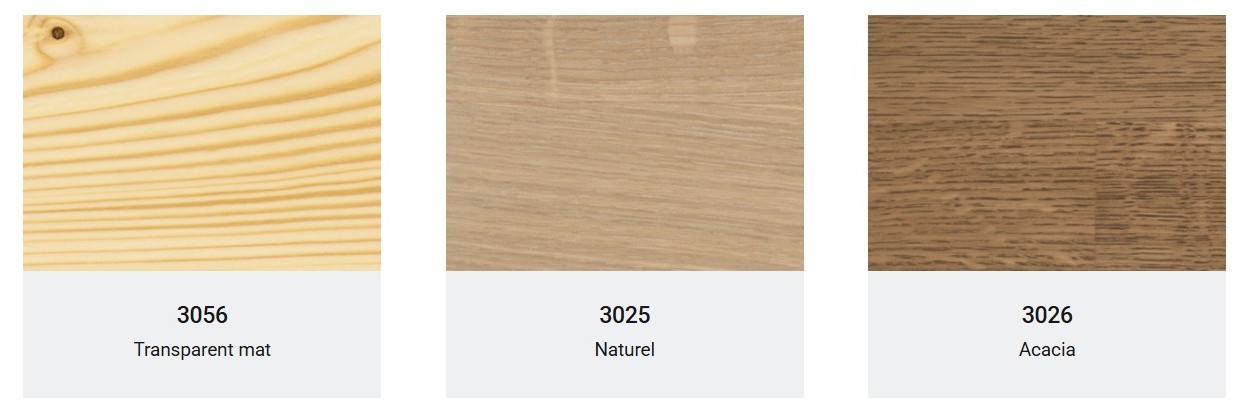
If you tend to make a lot of mess while cooking, this oil is for you!
How to Apply Top Oil
- Apply TopOil by rubbing with an Osmo Easy Pad or a lint-free cloth. Use a circular or figure-eight motion. Let the oil penetrate for about 15 minutes.
- Then brush in the direction of the grain with a brush or cloth to distribute the remaining product and remove excess. Make sure there is no visible film or buildup on the wood’s surface. If there is, the product was applied too generously. Use a clean brush or lint-free cloth to remove the excess.
- Let dry for approximately 8 to 10 hours. Lower temperatures and/or higher humidity can affect drying time.
- If you want a smoother finish, sand with 320-grit paper. Be sure to remove sanding dust afterward.
- Apply a 2nd coat using the same method. The 2nd coat should be dry after 8 to 10 hours.
Want the most eco-friendly oil possible?
C) Ligna’s Bio-Supra

“When I called before ordering and purchasing, I received excellent service and very good advice over the phone. This oil meets our expectations. We had 480 square feet to oil and the two 1-liter boxes were enough. (About 25 to 30% remains in the last box.) The bio aspect without VOCs was important to us(...)”
CALVARY, client.e confirmé.e
As their name indicates, natural oils are made from materials of natural origin and represent an interesting option if you want to limit the product’s impact on the environment and your living space.
Among products in this category, Ligna’s Bio-Supra stands out particularly. Its formula is composed of 100% solid materials, without solvent or VOCs. The product also has certification from Health Canada’s Chemical Safety Bureau for use on surfaces that may come into contact with food.
Another big advantage of Bio-Supra? It’s a single-coat oil. A single application is therefore generally sufficient to achieve the desired protection, and the surface is ready for use in just 24 hours. That also means it costs you less per sq ft.
However, some surfaces are subject to more demanding conditions. For a butcher block or a surface highly exposed to moisture, such as in a bathroom, we recommend applying a second coat to increase the wood’s protection.
Applying Bio-Supra
- Apply the oil in a thin coat on your countertop using a brush or applicator pad.
- Let penetrate for about 5 minutes before wiping off the excess with a cloth. You can also polish the oil with a polishing pad to achieve a patina on your countertop.
- For a surface exposed to a lot of moisture, apply a second coat after 24 hours of drying (in this case, polish only after the 2nd coat).
…and for the bathroom?
If you want to oil a sink countertop or bathroom furniture, you should opt for an oil specially formulated to resist moisture and frequent contact with water.
Bio-supra is a good product for bathrooms, especially if you apply two coats. However, there is another oil, designed specifically for humid environments:
D) Livos LINN Oil

“Excellent product, easy to apply.”
Nancy Gelinas, cliente confirmée
LINN oil is designed to protect furniture in humid environments. It can be used alone if you want to preserve the wood’s natural color, or be combined with a colored oil such as Kunos. In this case, Kunos provides the color and LINN is applied as a finishing coat to add protection against moisture.
LINN resists moisture, water, and even toothpaste, which can be particularly aggressive for certain finishes. It’s therefore a particularly interesting option for protecting a vanity or any other wooden furniture exposed to bathroom conditions.
04
Maintaining an Oiled Countertop
A countertop oil requires a bit more attention than a traditional finish. The good news is that with the right maintenance products, you can easily extend its lifespan.
Oil is particularly sensitive to products that are too acidic or aggressive. A conventional cleaner can therefore accelerate the finish’s degradation. Even water used alone, when it’s very hard or acidic, can eventually have an effect on the wood and its protection.
To preserve your countertop, favor the soap recommended by the manufacturer of the oil you used. These soaps are generally designed to be diluted in water and clean the surface without attacking the finish.
It’s a small change in your maintenance habits, but it can make a big difference in the long term. By using the right soap, you preserve your countertop’s protection longer and can space out applications of maintenance oil.

05
Applying a Coat of Maintenance Oil on Your Countertop
Another advantage of countertop oil is the ease with which it can be refreshed. No need to completely strip the surface or sand it deeply to apply a new coat.
- Start by thoroughly cleaning the countertop with the soap recommended for your oil. The surface must be clean and free of contaminants before proceeding.
- Do light sanding with fine abrasive paper (between 220 and 320 depending on the oil). The goal is not to remove the existing oil, but simply to make the surface slightly more porous to promote adhesion of the new coat.
- Once sanding is complete, dust thoroughly, then apply a thin coat of countertop oil. No need to apply a large amount. The oil will penetrate where the wood needs it and leave uniform protection on the surface.
That’s precisely what makes maintaining an oiled countertop so interesting: with minimal preparation, you can restore its appearance and protection without having to sand everything!

Start your project now!
You’ll find all the products you need directly on our website.
- Start by measuring your countertop’s dimensions to calculate the quantities of oil you’ll need. As a guide:
- Kunos countertop oil: 160 sq ft / 1 L (3 coats).
- Kunos LINN: 100 sq ft / 1 L (3 coats)
- Single-coat Bio Supra oil: 300 to 700 sq ft / 1 L (1 coat).
- Osmo TopOil: 258 sq ft / 1 L (1 coat).
- Choose the MicroBéton color you like.
- Place your order online and choose between in-store pickup and home delivery.
Want to learn more about natural oils and wood finishing? Check out the section of our blog dedicated to this topic!
Products found in this article.

Kunos Countertop Oil
BIO-SUPRA Zero-VOC Single-Coat Oil
Osmo TopOil Countertop & Cutting Board Oil
Q&A
Q. Can an oiled countertop be stained by wine, coffee, or oil?
Yes. Even an oil designed for countertops doesn’t make wood completely insensitive to stains. The longer a liquid stays on the surface, the more likely it is to penetrate the wood. The right reflex is therefore to quickly wipe up spills rather than let them set in. One of the big advantages of oil is that it’s easier to refresh to eliminate stains than with another type of finish.
Q. What should I do if my countertop becomes paler or duller over time?
This is generally a sign that the protection is starting to wear out. Before reapplying oil, clean the surface well and check its condition. Light sanding may then be necessary to prepare the wood to receive the new maintenance coat.
Q. Can you repair just part of an oiled countertop?
Yes, in some cases. Oil generally allows for localized touch-ups, which is much simpler than with a finish that forms a film on the surface. However, a partial repair may show a difference in color or sheen. For a uniform result, it may be preferable to treat a larger section.
Q. Why does my oiled countertop remain sticky after application?
An oil that remains sticky is often the result of too generous a coat or excess that wasn’t properly wiped off. The oil should penetrate into the wood rather than form a thick layer on the surface. Therefore, follow the quantities and application times recommended by the manufacturer.
Q. Can you place objects or use the countertop immediately after oiling it?
It’s better to wait until the oil is sufficiently dry and cured before putting the countertop back into normal service. The time required depends on the product, temperature, and ambient humidity. Even if the surface seems dry to the touch, the finish may still be curing.
Q. Does a countertop oil work for all types of wood?
Not necessarily. Some species are denser, more resinous, or more difficult to impregnate than others. The result can therefore vary depending on the wood used. If you’re working with a particular species or exotic wood, always check the manufacturer’s recommendations before choosing your oil.


